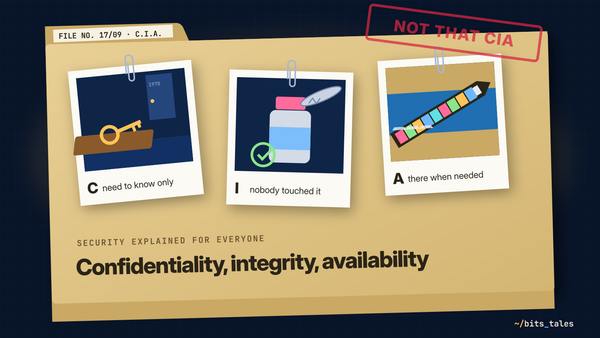
Security The CIA that isn't spying on you: confidentiality, integrity and availability in an ordinary day A mandatory "CIA training" and one day to work it out: the key under the doormat, the conclave without signal, the queen betrayed by beer barrels, the cough-syrup seal, the plane that ran dry because of pounds and the ship sideways in Suez.
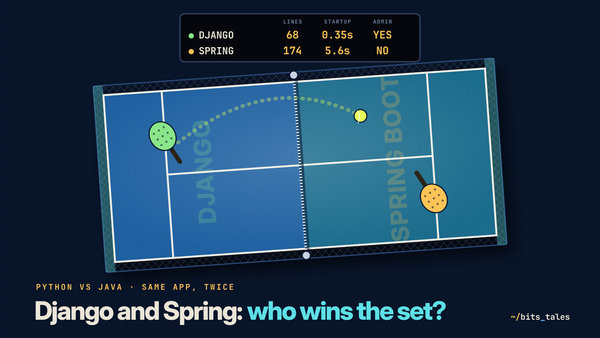
Programming Django and Spring: the same app, twice The padel club wants online bookings and you write them twice, in Django and in Spring Boot. A Kansas newsroom versus the winter of J2EE, queries written in names, an admin in four lines, the 403 trap and the measured numbers.
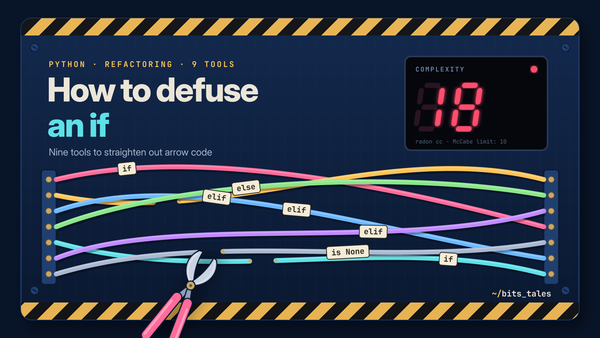
Programming How to defuse an if: nine tools to straighten out arrow code You inherit shipping.py: an arrow-shaped function with complexity 18. One afternoon, nine tools (guard clauses, dictionaries, bisect, polymorphism, Null Object, match, EAFP) and the discovery that in Python the branchless trick is slower.
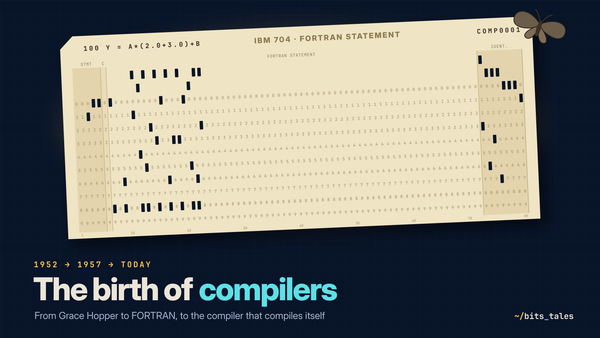
Programming A machine that writes programs: the birth of compilers Philadelphia, 1952: you write machine code by hand and Grace Hopper wants the computer to write it for you. Then Böhm in Zurich, Glennie in Manchester, Backus's FORTRAN against the "priesthood", a mini-compiler in Python and Ken Thompson's invisible backdoor.
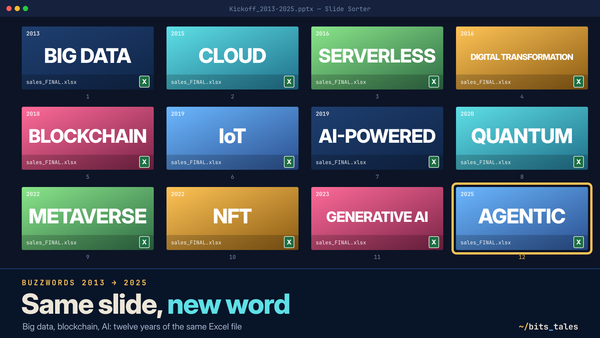
Business Same slide, new word: twelve years of buzzwords on the same Excel file Big Data, Cloud, Blockchain, IoT, Quantum, Metaverse, generative AI and now Agentic: Dr Brambilla's kickoff folder, one slide a year. What they thought these were, what they really are, and three questions to ask before the next word.
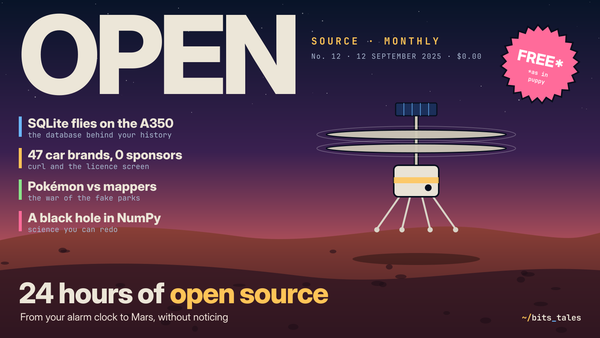
Open Source Twenty-four hours of open source: from your alarm clock to Mars, without noticing An ordinary Friday, with a counter in hand: a blessed database flying on the A350, 47 car brands without a single sponsor, fake parks for Pokémon Go, a helicopter on Mars and a black hole made with NumPy. The advantages of open source, one per hour.
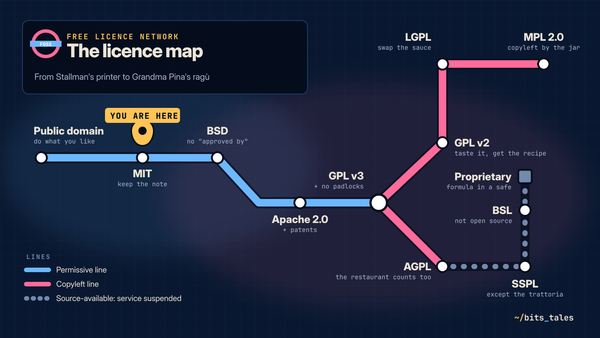
Open Source Grandma Pina's ragù and the GPL: the story of free software, and licences explained in the kitchen You've just finished your first project and GitHub asks you to "Choose a license". Understanding that menu takes a trip: Stallman's printer, a hobby kernel, a blue router, your Mac's bash stuck in 2006. Then the licences, explained as recipes.
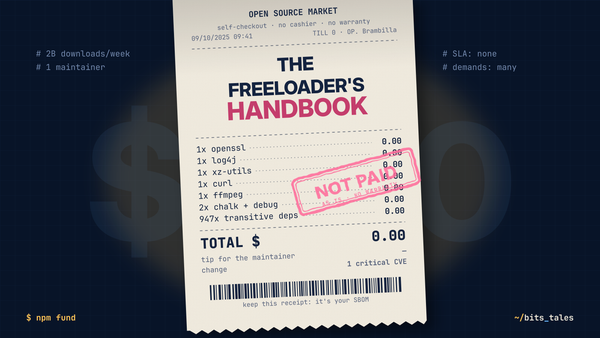
Open Source The Freeloader's Handbook: open source as seen by the people who maintain it (for free) You're one person with an inbox and a library downloaded forty million times a week. On Monday it was chalk and debug's turn. Tonight you get the handbook companies use to exploit your work: seven rules, all field-tested.
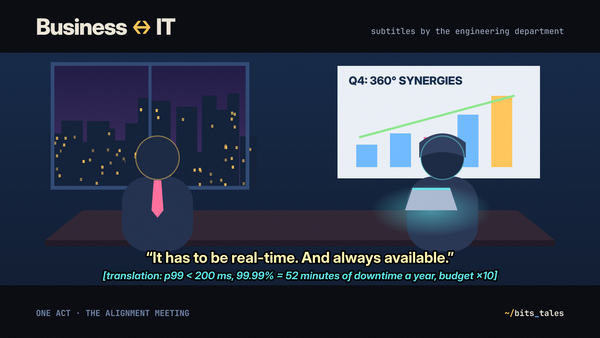
Software Engineering Business ↔ IT: the alignment meeting, with subtitles “Real-time”, “always available”, “it's just one more field”, “let's add AI”: a one-act play in a meeting room, with the Product Owner interpreting live and technical notes for every scene.
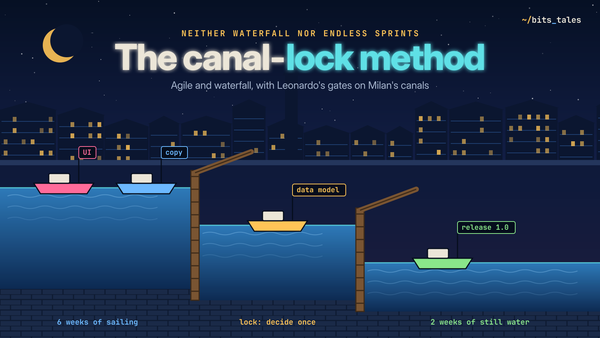
Software Engineering Neither waterfall nor endless sprints: the canal-lock method, for whoever has to choose On Friday evening Brambilla asks you to "go Agile" by next quarter, Gantt chart included. You have a weekend to choose between waterfall and Agile: you read the original texts, use queueing theory to see why the team is tired, and find a middle way on Milan's canals.
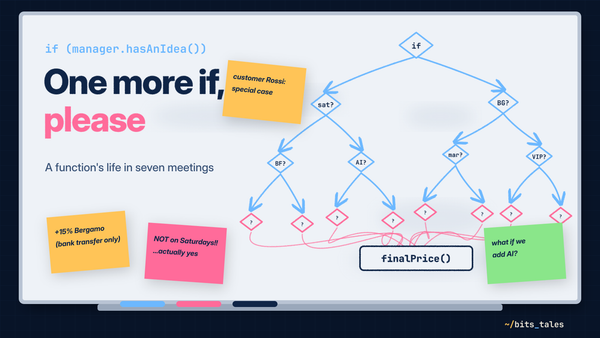
Software Engineering One more if, please: a function's life in seven meetings The business keeps changing its mind, a super-manager with a degree in Potato Chip Science has a vision, and finalPrice() goes from one line to a maze. Autopsy and treatment of if proliferation.
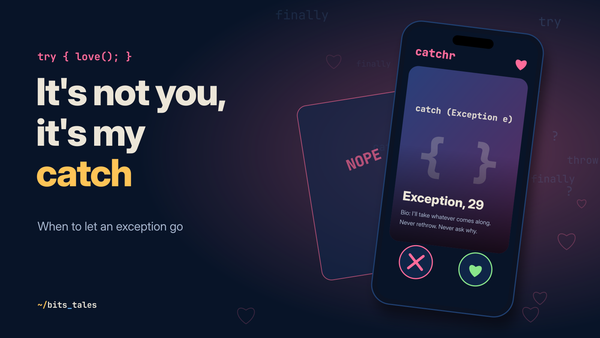
Programming It's not you, it's my catch: an advice column for exceptions Empty catches, bare excepts, endless retries, lost causes and return inside finally: Dr Finally answers your code's letters. Because catch is not always the answer.
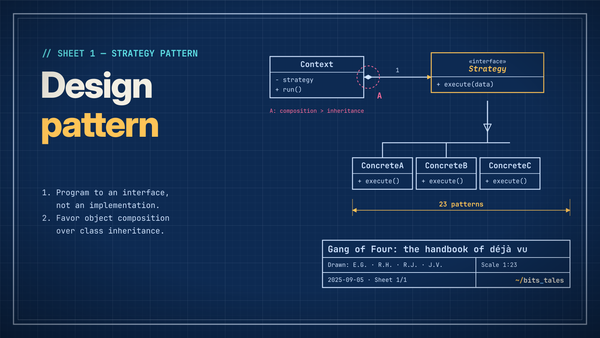
Software Engineering Design patterns: the catalogue entry for engineering's favourite pattern (software not required) The Gang of Four, Christopher Alexander, the H-bridge and the voltage divider: what a design pattern really is, explained with the GoF template applied to itself.
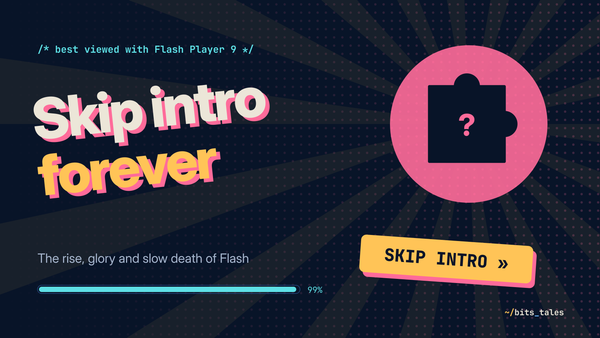
Web Skip intro forever: the rise, glory and slow death of Flash From vector cartoons for 28.8k modems to the most exploited plugin on the Internet: SWF, ActionScript, JIT spraying, “Thoughts on Flash” and the kill switch that even stopped trains.
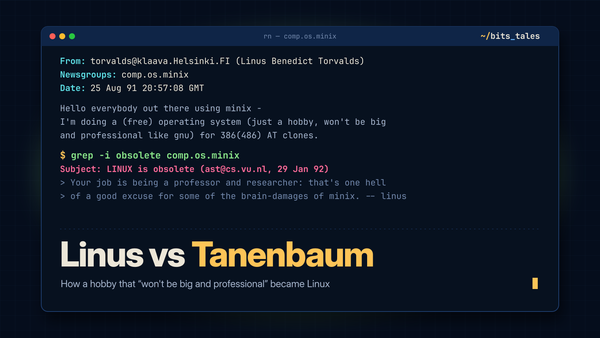
Linux Linus vs Tanenbaum: how a hobby that “won't be big and professional” became Linux MINIX, a 386 bought on instalments, “just a hobby” and the “LINUX is obsolete” flame war: microkernel versus monolithic, and how both sides ended up winning.
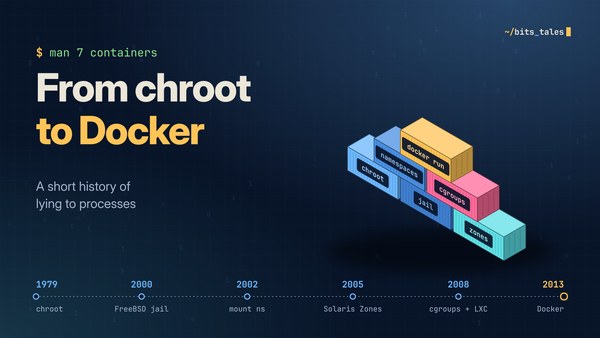
Linux From chroot to Docker: a short history of lying to processes Containers, namespaces, cgroups, OverlayFS: 34 years of well-coordinated lies the kernel tells processes, from 1979's chroot to Docker's whale.